


How to Master B2G Marketing for Defense Tech Startups.
Are you a CEO, C-level executive, early-stage B2B SaaS entrepreneur, or business consultant aiming to break into government markets with your defense tech startup? If so, you’ve probably realized that reaching government agencies requires a different playbook than pitching to commercial clients. In the Business-to-Government (B2G) realm, credibility, compliance, and trust are non-negotiable. Decision-makers in defense agencies are tasked with safeguarding national security, so they’re cautious, methodical, and focused on long-term value and reliability.
This guide will help you navigate the B2G marketing landscape, providing strategies to build authority, foster trust, and engage with the right government contacts. We’ll also explore whether Account-Based Marketing (ABM) can help you focus on agencies that matter most. By the end, you’ll have a blueprint for breaking into the defense tech space, differentiating your startup, and setting the stage for high-impact partnerships and contracts.
Why Is Government Marketing Different?
Government marketing isn’t just another version of B2B sales. While traditional commercial clients may be swayed by flashy demos or quick ROI, government agencies demand rigorous validation. They operate under strict procurement guidelines, focusing on solutions that meet compliance standards, security protocols, and strategic objectives. Defense agencies, in particular, can’t afford to take risks with unproven vendors. They need assurance that you understand their mission, follow regulations, and can be a reliable partner for years to come.
This rigorous environment means your marketing messages must be thoughtful, data-driven, and trust-building. Credibility is king. Agencies want to see evidence that you’ve done your homework, can handle complex regulatory frameworks, and know how to speak their language of security, stability, and long-term preparedness.
1. Establishing Thought Leadership: Why Expertise Matters
In the defense tech world, showing off your industry prowess isn’t bragging—it’s table stakes. Government clients look for domain experts who can anticipate challenges, solve pressing problems, and guide them through ever-evolving threats and technologies.
Tactics for Thought Leadership:
White Papers and Reports: Produce in-depth analyses on pressing defense tech issues—cybersecurity frameworks, autonomous defense systems, satellite resilience, or the integration of AI into surveillance. These well-researched documents position your startup as a credible knowledge source.
Industry Conferences and Panels: Speaking at defense-oriented events sends a strong signal. At gatherings like AUSA or DEF CON, you can share insights on emerging threats or new defensive architectures. Your presence on stage or as part of a panel shows that industry insiders trust your perspective.
Media and Publishing: Contributing guest articles to respected defense and security publications expands your reach. Thoughtful commentary on regulatory shifts, compliance tips, or technology trends demonstrates you’re not just selling a product—you’re shaping the conversation.
I recall attending a defense technology symposium where our early-stage cybersecurity startup had just published a white paper on secure satellite communications. Before we even reached out, a procurement officer approached our booth, referencing our report. “Your team’s perspective on end-to-end encryption in low Earth orbit was spot-on,” he said, “and I’d love to hear more.” That simple interaction, sparked by credible thought leadership, opened a channel that would have taken months of cold outreach to establish.
2. Building a Reputation for Compliance and Security
If there’s one thing that can kill a government deal before it starts, it’s perceived non-compliance or weak security. Defense agencies must ensure their vendors meet stringent standards, whether it’s ITAR, CMMC, or specific cybersecurity protocols. Make compliance front and center in your marketing narrative.
How to Show You’re Compliant:
Certifications and Standards: Prominently display relevant certifications on your website and marketing materials. If you’re ITAR-compliant or have completed rigorous CMMC assessments, let everyone know. It proves you understand and respect their operational constraints.
Compliance-Centric Case Studies: Highlight past projects where you navigated complex regulatory requirements. For example, detail how your solution met a government’s security checklist, reduced vulnerabilities, and passed third-party audits.
Clear Documentation: Dedicate a section on your site to compliance FAQs, explaining how you handle sensitive data, maintain supply chain integrity, and stay updated on evolving standards. This openness can soothe procurement officers’ nerves.
3. Networking for B2G Success: Relationships Are Everything
In government contracting, who you know can be as important as what you know. Building relationships is a long game, often starting well before an RFP lands on your desk.
Where and How to Network:
Defense Industry Events: Conferences focused on defense, security, or public sector innovation are invaluable. Engage in conversations, ask about procurement challenges, and show genuine interest in their needs. Sometimes, it’s a casual chat over coffee that sparks a lasting connection.
Vendor Registrations and Programs: Register your startup on SAM.gov and other government procurement platforms. Many agencies also have small business or innovation outreach programs designed to help newcomers understand their needs and processes.
Partner with Established Contractors: Larger, established defense contractors can serve as gateways. If you integrate your solution into their broader offerings, you’ll gain visibility, mentorship, and possibly a subcontract that gets your foot in the door.
At one industry expo, I ran into a procurement officer I’d previously connected with on LinkedIn. Months earlier, I’d commented on a post about secure data transfer protocols in unmanned aerial vehicles, providing a small insight. Meeting in person, he recalled that exchange. “I appreciated your thoughtful input online,” he told me. “Now that we’ve met, I’d be interested in hearing more about your product’s unique encryption methods.” That initial digital interaction, although small, built enough familiarity to make our face-to-face meeting productive and memorable.
4. Account-Based Marketing (ABM): A Good Fit for Government Clients?
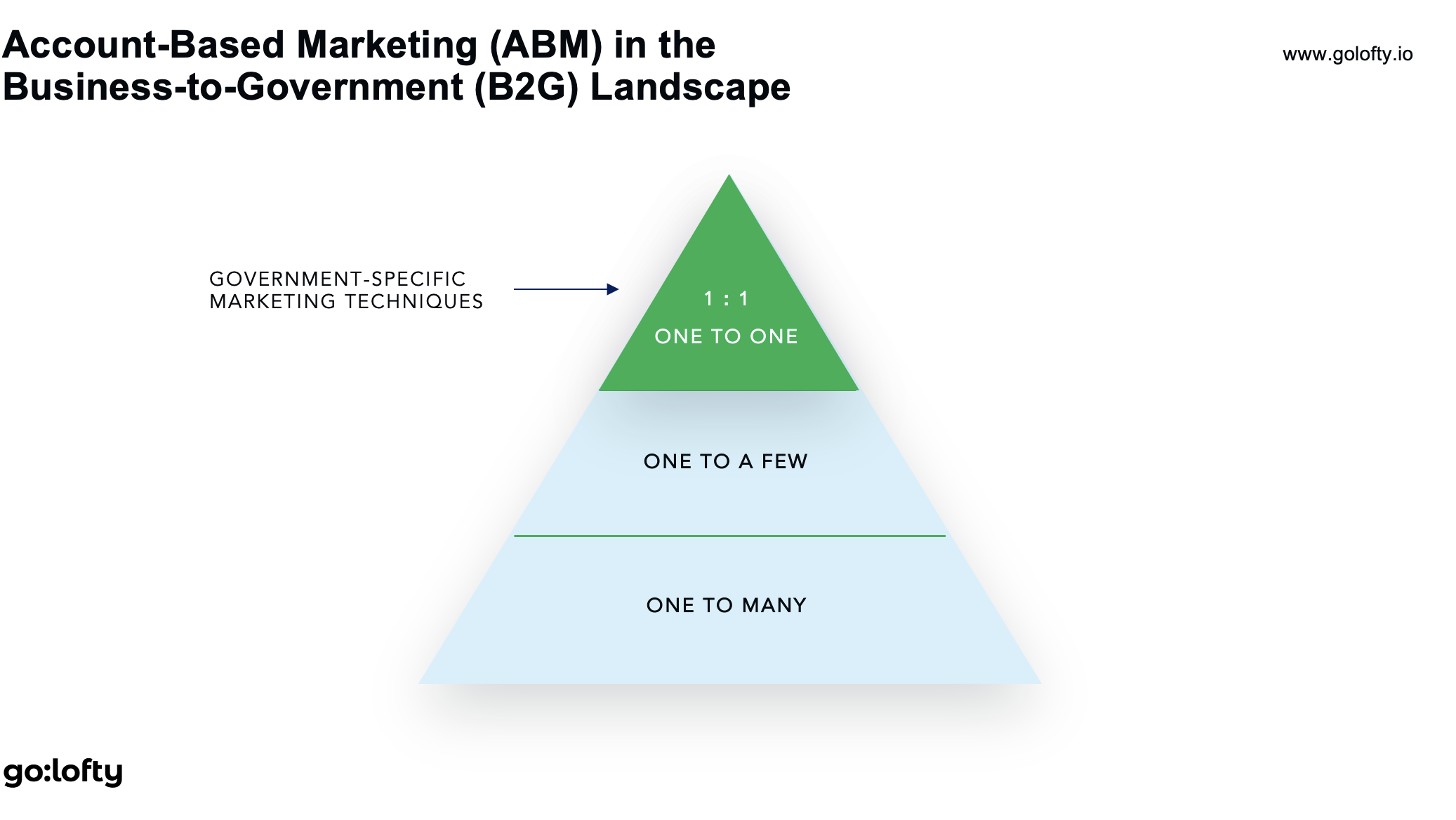
Account-Based Marketing means tailoring your outreach to a select few high-value accounts. In the B2G world, this translates into focusing on specific agencies or departments that best align with your solution. Given the slow and methodical nature of government procurement, ABM can ensure you invest resources in the right places.
How to Implement ABM for B2G:
Identify High-Value Targets: Perhaps you specialize in communications security—target agencies known for satellite operations or secure data transmissions. Focus on those whose mission needs align with your strengths.
Personalized Content: Tailor white papers, case studies, and presentations to address the agency’s unique challenges. For example, if targeting the Department of Defense, highlight how your solution meets national security requirements and integrates seamlessly with existing infrastructure.
One-on-One Engagement: Use LinkedIn to connect with key decision-makers, join relevant groups, and share content that resonates with their interests. Offer to host a private webinar for their team, providing insights they can’t get elsewhere.
ABM fits well in defense tech marketing because it acknowledges the complexity and long lead times. By investing energy into a few top prospects, you increase your odds of building meaningful relationships that lead to real contracts.
5. Strengthening Your Digital Presence: First Impressions Count
Before a government official picks up the phone or sends an email, they’ll likely Google your company. Your online presence needs to exude professionalism, credibility, and expertise.
Tips for a Robust Digital Footprint:
Website Clarity: Make sure your website highlights compliance credentials, security measures, and government-ready solutions. Include a dedicated “For Government” section, outlining contract vehicles you support, certifications, and case studies relevant to public sector clients.
LinkedIn Activity: Consistently share insights, comment on industry updates, and interact with posts related to defense and government procurement. LinkedIn’s targeting tools can also help you run ads aimed at government decision-makers.
Targeted Advertising: Some industry-specific platforms allow advertising that reaches procurement officers or defense professionals. Invest in these channels if they align with your strategy and budget.
Your digital presence should not only inform but also reassure. Government clients want to know you understand their unique environment. Clear, compliance-focused messaging coupled with evidence of thought leadership goes a long way.
Measuring Success: Beyond Traditional KPIs
Securing a government contract may take months or even years. This drawn-out timeline means you can’t rely solely on website traffic or click-through rates as markers of success. Instead, focus on:
Connections Made: Track the number of meaningful interactions with government officials—emails exchanged, introductions at events, LinkedIn connections with decision-makers.
RFP Invitations: Over time, are you being invited to respond to more RFPs or RFIs? An increase in requests from government agencies suggests your marketing efforts are placing you on the radar of the right people.
Pipeline Growth: Even if contracts take time, are you building a pipeline of potential deals? Each promising lead suggests you’re moving in the right direction.
Continual Adaptation: Staying Agile in B2G Marketing
The defense landscape evolves quickly. New threats emerge, budgets shift, and regulations tighten. Keep a pulse on policy changes, invest in ongoing training for your team, and solicit feedback from any government contacts you’ve made. If you sense a shift in what agencies prioritize—say, more focus on cybersecurity resilience—adjust your content and outreach accordingly.
Final Thoughts: B2G Marketing as a Long-Term Strategy
Breaking into the defense tech sector is a marathon, not a sprint. Government-specific marketing requires patience, persistence, and strategic refinement. By establishing thought leadership, emphasizing compliance, building relationships, leveraging ABM, and polishing your digital presence, you’ll set the stage for lasting partnerships and valuable contracts.
Remember, marketing here isn’t just about leads and conversion metrics. It’s about building a reputation that withstands scrutiny, a network that opens doors, and an image of reliability and innovation. If you’re ready to navigate this complex terrain, consider partnering with experts who understand the unique demands of B2G. At Go:lofty Consulting, we help defense tech startups craft government-focused marketing strategies, manage compliance, and connect with the right audiences. Visit golofty.io to learn how we can support you in mastering government-specific marketing and achieving sustainable growth in the defense tech arena.
Go:lofty bonus content
1. How is B2G marketing different from B2B or B2C?
Government procurement follows a highly regulated, formal process. Unlike B2B or B2C, success is less about brand recognition and more about trust, compliance, and credibility. Defense buyers prioritize security clearances, track record, and risk mitigation. Your marketing must demonstrate readiness to meet regulatory requirements and deliver mission-critical reliability.
2. What should be the first step in building a B2G marketing strategy?
Start with market intelligence. Map the agencies, programs, and funding priorities relevant to your solution. Defense budgets are public, but navigating them requires expertise. Understanding procurement cycles and where your technology fits in the National Defense Strategy ensures you target the right stakeholders instead of spreading efforts thin.
3. How do I identify my ideal government customer?
Your ICP (ideal customer profile) in defense is not a “buyer persona” but a mission owner. Identify the program managers, contracting officers, and primes who are responsible for solving the problem your tech addresses. Tailor your messaging to how your solution enhances their mission readiness, cost efficiency, or operational advantage.
4. How important are certifications and compliance in defense marketing?
They are non-negotiable. In B2G defense, certifications such as CMMC, ITAR, or ISO act as entry tickets. Without them, marketing efforts stall. Compliance itself becomes part of your value proposition. Demonstrating that you meet or exceed standards builds trust and sets you apart from startups that underestimate these requirements.
5. How can a small defense tech startup compete against established primes?
You cannot outspend or outsize primes, but you can out-innovate and out-maneuver them. Focus on niche capabilities, speed of innovation, and partnerships. Many agencies now seek small businesses specifically because they deliver agility. Position your startup as a complementary partner to primes, not just a competitor.
6. What role do partnerships play in B2G defense marketing?
Partnerships are critical. To win contracts, especially larger ones, you often need to team with established integrators or primes. Partnering increases credibility, extends reach into procurement channels, and helps you navigate compliance and execution risks. Your marketing should highlight how your solution adds value to potential partners’ portfolios.
7. What channels are most effective for reaching government buyers?
Forget consumer-style ads. In defense, effective channels are industry conferences, defense-focused trade shows, government-industry roundtables, and specialized publications. Thought leadership—white papers, mission-driven use cases, and technology briefs—plays a bigger role than promotional campaigns. Building trust through reputation and presence is the ultimate “channel.”
8. How do I communicate technical complexity to government decision-makers?
Use the language of mission outcomes, not technical specs. Instead of “our AI algorithm detects anomalies at 99.9% accuracy,” say “our solution cuts time-to-detection from 30 minutes to 30 seconds, giving commanders faster situational awareness.” Show how technology directly translates into operational advantage, cost savings, or readiness improvements.
9. What role does digital marketing play in defense B2G?
While digital marketing is less dominant than in B2B, it still matters. A credible online presence, case studies, and thought leadership articles reinforce trust. Agencies and primes will look you up. LinkedIn presence, cybersecurity briefings, and policy-relevant insights can position your startup as an expert voice in the defense innovation ecosystem.
10. How do I measure success in a B2G defense marketing strategy?
Traditional KPIs like click-through rates mean little. Success is measured by contract pipeline growth, number of qualified agency introductions, partnerships formed, and position in multi-year programs. Defense sales cycles are long—sometimes years—so patience is required. Marketing should be seen as relationship capital that compounds over time, not as a quick lead-generation tool.
Watch the video
More to read

Click here
“You already have the talent. This is about giving that talent a better operating model to run on.”